
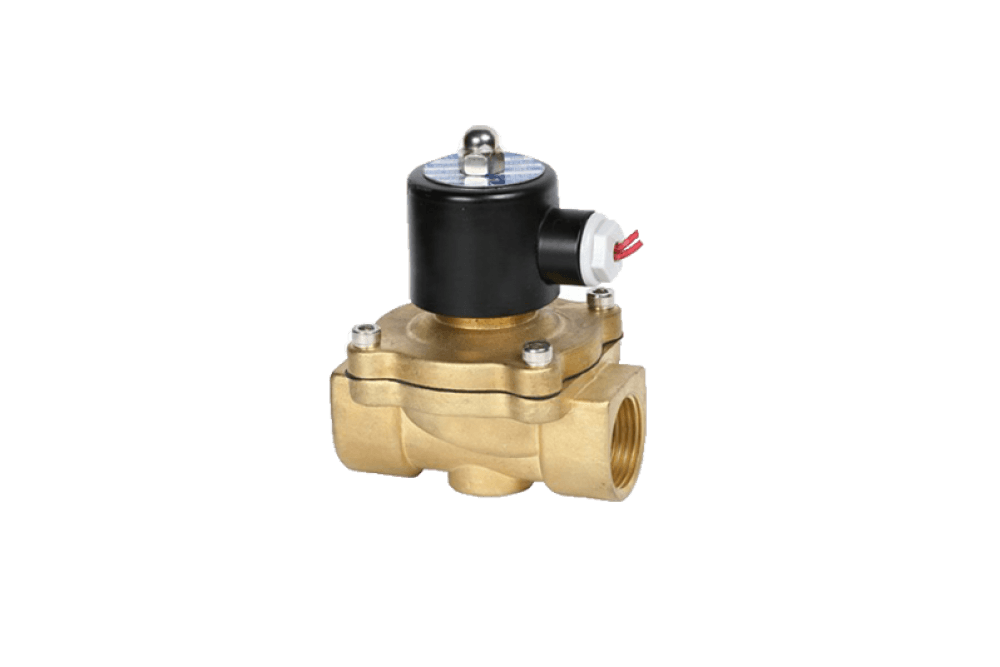
Solenoid Valve
Solenoid Valve
Solenoid Valve is a valve used to control the direction of air (or fluid) by energizing an electrical coil, together with a spring return or a second coil when the valve must move to/hold another position. When current flows through the coil, the magnetic field pulls the plunger/armature to shift the valve; when power is removed, a spring (typical for single-solenoid designs) returns the valve to its normal position.
Solenoid valves are commonly classified by how the valve shifts:
1) Single solenoid (solenoid actuated, spring return/monostable)
2) Double solenoid (two coils; switches between two states/bistable)
They can also be classified by application, such as water, gas, hydraulic, and pneumatic solenoid valves.
For pneumatic solenoid valves, common configurations include 2/2, 3/2, and 5/2-way, and N/O (Normally Open) or N/C (Normally Closed), where NO/NC describe the de-energized state. A 2/2-way valve is a simple two-port, two-position on/off valve and can be used for air/gas and also for liquids (e.g., water/oil) when the valve is designed for that medium.
Related products
- Valve
Gate Valve
Read moreGate Valve imported from Japan, good properties, resistant to high friction. Suitable for on-off work, water blocking.
- Valve
Globe Valve
Read moreGlobe Valve adjusts the flow rate. By controlling the gap between the disc and the seat
- Valve
Butterfly Valve
Read moreButterfly valve is a valve in the valve family known as a quarter-turn valve (a valve that rotates a quarter of a circle). The “butterfly” is a valve with a circular metal plate connected to the valve stem. When the valve is closed, it switches to a position that entirely stops the flow of fluid.