
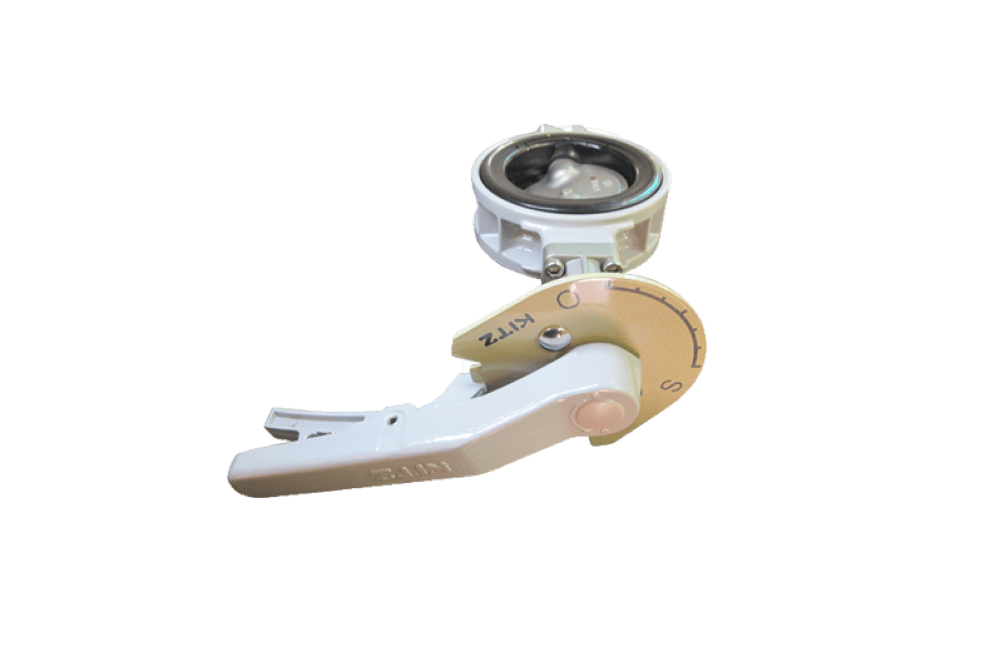
Butterfly Valve
Butterfly Valve
Butterfly valve is a valve in the valve family known as a quarter-turn valve (a valve that rotates a quarter of a circle). The “butterfly” is a valve with a circular metal plate connected to the valve stem. When the valve is closed, it switches to a position that entirely stops the flow of fluid.
Butterfly got its name from the “butterfly shape” that occurs when the valve rotates. When the valve is closed, it switches to a position that entirely stops the flow of fluid. When the valve is fully open, the valve rotates a quarter of a circle to open the fluid flow path with almost no obstruction. The valve body may be opened gradually to adjust the flow rate. Unlike ball valves, this throttle valve is in that the valve body is always in the flow channel. This causes pressure loss in the flow regardless of the valve’s open position.
This type of valve is widely used in the chemical industry, sewerage and water supply systems. The valve body is designed so that the fluid does not come into contact with the moving metal parts of the valve. Valve seats can be made from many materials to handle all kinds of fluids. These valves are durable and require very little maintenance. Butterfly is usually medium to very large size (DN 40–600).
Related products
- Valve
Gate Valve
Read moreGate Valve imported from Japan, good properties, resistant to high friction. Suitable for on-off work, water blocking.
- Valve
Ball Valve
Read moreBall valve is a valve that turns off the water inside a spherical shape. It has holes for water to flow through or close to prevent water from flowing. A key feature of the ball valve is that it can be fully open or closed, dimmed or moderately open.
- Valve
Pressure Reducing Valve
Read morePressure Reducing Valve
Pressure Reducing Valve is a valve used to reduce the output pressure in both conditions: flowing and no water flow. - Valve
Steam Trap
Read moreSTEAM TRAP Although steam trap is a small device, and the price is not high, it is very necessary and must be selected accordingly. Otherwise, it may cause enormous damage and loss to the factory without the management’s knowledge. The main function of the steam trap is to drain the condensate and the air or gas-generated or contained in the steam system to be discharged without the loss of steam from the system.